By Zachary Cohen:
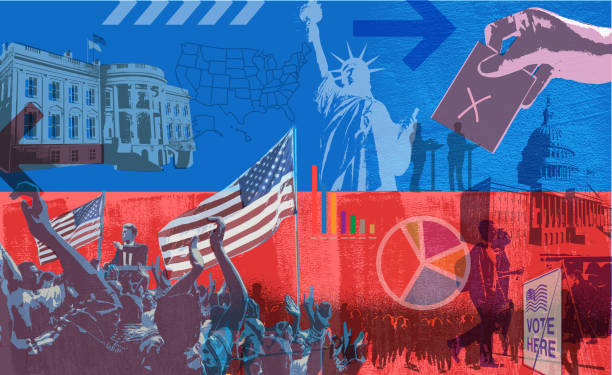
Many intertwine the idea of government and politics as one and the same; however, the two really have much less in common than you would think. Government is a promise of order and legitimacy. If you were to concentrate on the power in your hands and think outside of law and convention, you could really do anything you wanted to do anytime you wanted it. There is really nothing immediate preventing men from stealing, lying, and killing whenever they so chose. When man emerged from the state of nature, we simply decided that an enforcement body would be the best way to regulate our unpredictable-ness. Government exists in many forms: democracies, monarchies, oligarchies, but they are all the same at the core. To act as traffic control, tell us when to stop and when to go. Government is an institution, which is an important concept to its appraisal. The mood government inspires is pretty typically an accurate reflection of success.
Politics is not a structure or institution like government. Politics is a culture of competition that manifests itself in government. Technique is required for mastery, becoming a powerful tool for its user. There are clear winners and losers in politics, observable throughout history. Alexander the Great is a prime example, one who held the great knowledge and luck to make his impact on history. These elements, coined by Niccolo Machiavelli as “virtù” and “fortuna,” respect the political skill and seizure of opportunity as the variables for achievement. Alexander the Great understood philosophy and possessed immense military prowess. His opportunity came from kingship, of which he claimed on behalf of Macedonia and his conquests. Skill or virtù is politics, and its exact comprehension. Without a direct kingship or inheritance, to what degree do we establish opportunity and chance in contemporary democracy? The virtù part is much more important without chance to discriminate.
It could be argued that government is best when functioning as a sequential battle of rationale, pitting policy versus policy. We have established that government is run instead by politics, a trend that is demonstrated in ancient Athens’ democratic system. The arrival of a novel marketplace-style assembly placed governance in the hands of the citizen, a transition from its strictly elite access granted prior. The beneficiaries of the old regime, the elites, rationally wanted power back. In order for them to reclaim control, Sophists instructed them that they needed to learn persuasion. Sophists believed that reality was determined by human perception, therefore the reality’s “truth” is malleable to skilled manipulation. Rich children could learn a practical course of Sophist rhetoric and political competence that allowed disparity to continue in the policy practice once again. Did this expertise contradict the idea of democracy? In some ways yes, the less-privileged civilian could not truly compete with his fortunate peer; however, many would rather accept this difference than hold no contest at all.
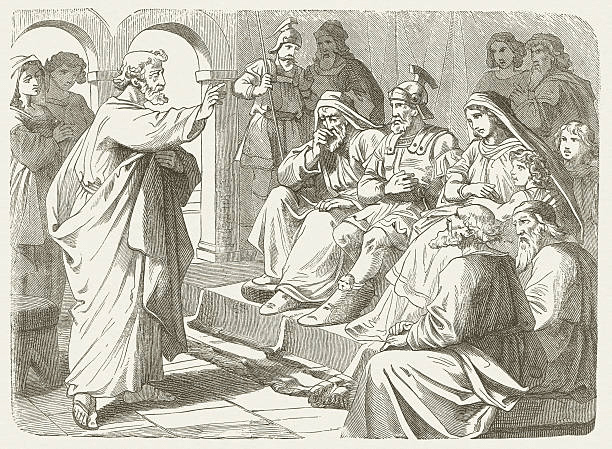
Discourse in Ancient Athenian democracy
Peter’s sermon at Cornelius (Acts 10), wood engraving, published 1877
Credit: ZU_09
Sophists embody how the most able find ways to rise to the top in governance, regardless of structure. Their methods are expansive besides pursuit of education. Politics is competition. The positions of success are always shorter in supply than their demand. Thus, the inclined must exclude others to claim for themselves. Government becomes a battleground of politics, a hill on which actors utilize leverages to climb. This competitive nature of poses several questions: Is the president the president because they are the most qualified, or because they eliminated their peers?
So above is a brief history of politics and a discussion of its consequences. But what does politics look like in action? Politics can be a display of you and a target on the internet to cater to that target’s supporters. Politics can be a slander of an opponent’s good name to dissuade their supporters. The narrative building tactics that turn red men blue and blue men red are the units of politics that sway public opinion any which way. Partisanship is the largest scale. In discussing this appraisal of politics, we have to consider the degree to which we award the system merit. We have sacrificed benevolence and ethical virtue when persuasion and even deception earns. Government could be the most revered affirmation of justice. Instead, competition for power dominates the structures that provide food stamps for the less fortunate and send our armed forces to battle.
Political philosophy is an examination of power. Long ago we have decided that humanity is better off when a few wield the power of the many. The methods in which government exercises the gift they have been given determines the standing of society. Government will adapt to whatever engine is behind it, which currently is one of politics and competition. Even in our most seemingly ethical creation, we have introduced brutality into control. The morality of that feature is certainly debatable. The fact is: history has shown us (from Sophism to modern partisanship) that humans want power, and they will need to beat each other to get it.
 Over the Wall
Leave a comment